
Winter and freeze thaw
Does Rubber Surfacing Hold Up to Indiana Winters?
Updated October 2026 · Tread Strong Solutions, Middlebury, IN
Quick answer
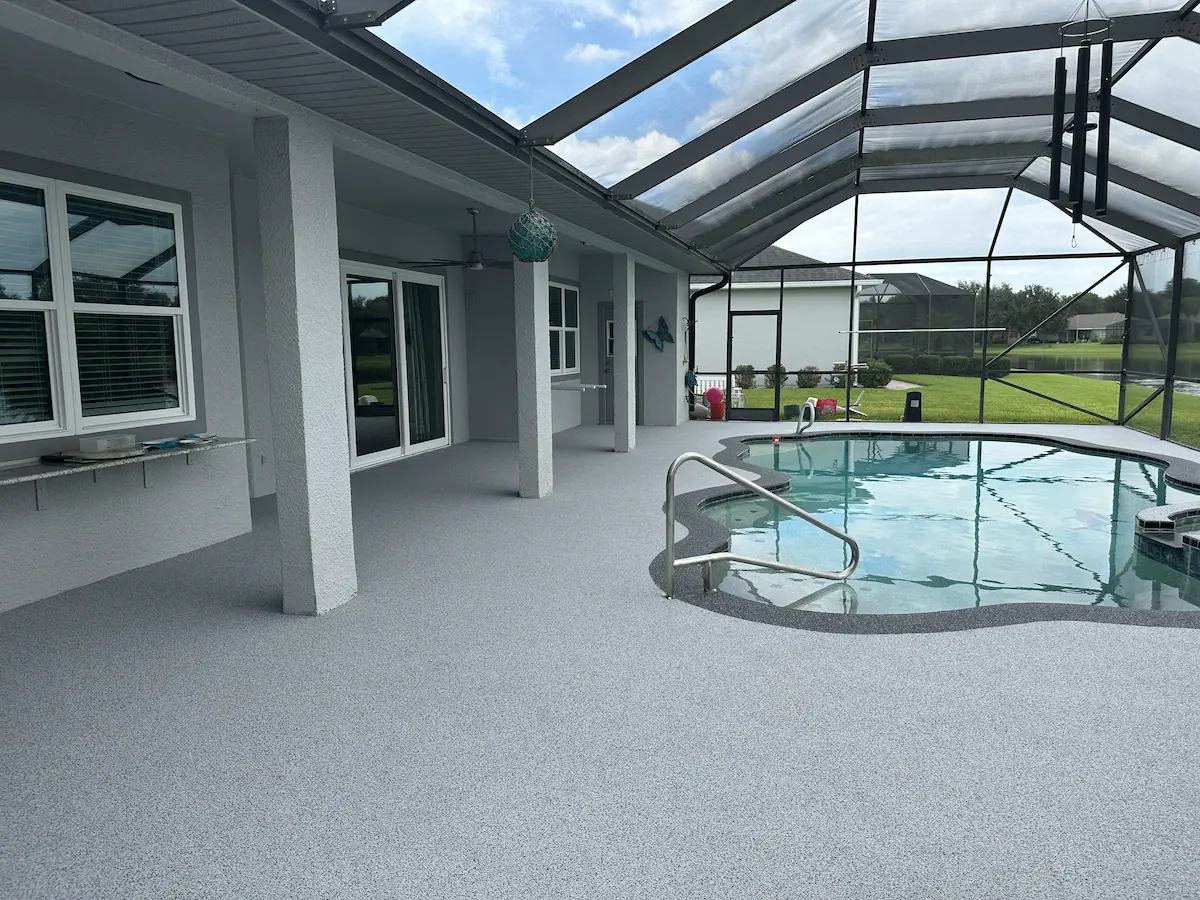
Yes, when it is installed right. Soft Crete rubber is flexible and permeable, so it moves slightly with temperature swings instead of cracking like rigid concrete, and less melt water sits on top to refreeze. It can still get icy in freezing rain or frost, so treat it like any outdoor surface in winter. Soft Crete is a Canadian company and builds its rubber surfacing for freeze thaw winters. Clear snow with a plastic or rubber edged shovel, go easy on de-icer, and keep metal plow blades off it.
- Authorized Soft Crete installer
- 5 year product and workmanship warranty
- Local and family owned
What freeze thaw does to bare concrete
Concrete is full of tiny pores. Water soaks in, freezes, expands and pushes the surface apart. Do that dozens of times a winter, add road salt, and the top of the slab starts to flake, pit and crack. That is why so many Northern Indiana patios and pool decks look rough by their tenth spring.
How Soft Crete rubber handles it
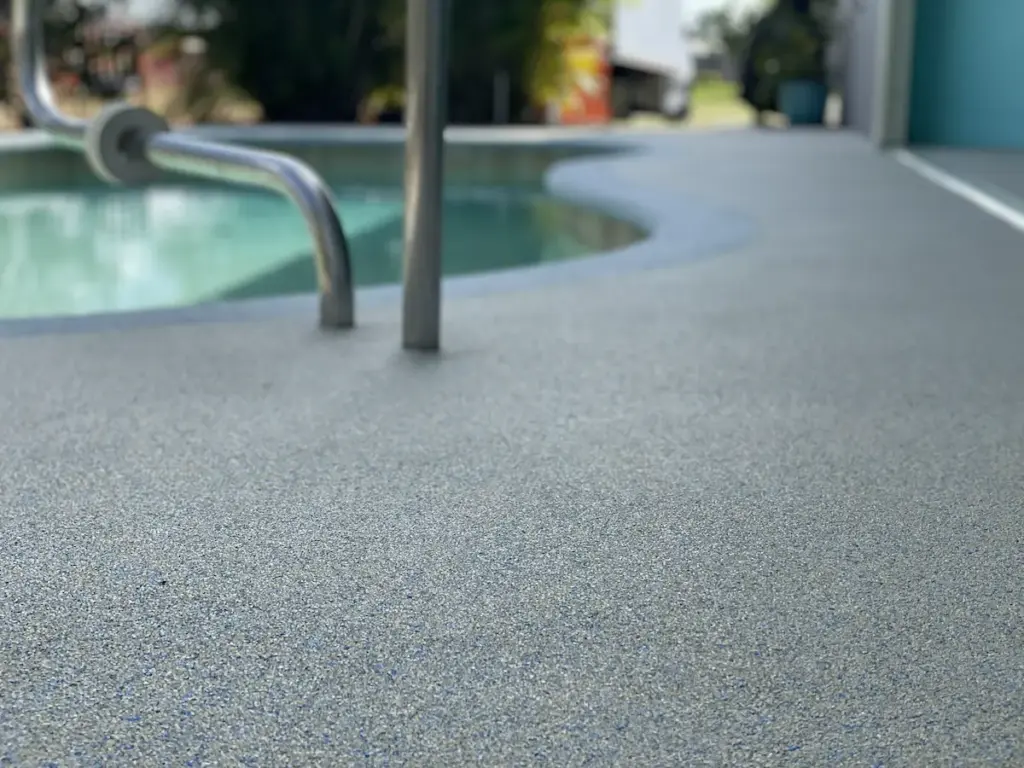
- Permeable: Soft Crete says all of its rubber systems let water pass through, so less melt pools on top to refreeze. Frost and freezing rain can still ice it over.
- Flexible: the rubber and binder give slightly with temperature swings instead of cracking.
- Seamless: no joints for water to work into.
- Built for cold: Soft Crete is based in Ontario, Canada, and designs its rubber surfacing for freeze thaw winters.
Snow and ice care
These are Soft Crete's own winter care guidelines, plus what Tread Strong tells customers:
- Shovel with a plastic shovel or one with a rubber edge. No metal blades or hard scraping.
- Use de-icer sparingly. Pet and surface safe products are a better choice than rock salt.
- Keep snowplows and studded tires off it. A plow blade can gouge the surface.
- Sweep or blow off leaves in the fall.
Why outdoor jobs install in spring
The rubber needs temperatures around 50 degrees or warmer to install and cure properly. In Northern Indiana that means the outdoor season runs roughly spring through fall. Estimates keep going all year, and anything quoted in late fall goes on the spring schedule as soon as it is warm enough.
Winter is not wasted: it is the season for indoor jobs, and for pontoon decks in the heated Middlebury shop from November through March. See why winter is the time to redo a pontoon deck.
What a surface cannot fix
If the ground under a slab heaves or settles, the concrete moves, and no surface on top can stop that. Dewayne looks for that kind of movement at the estimate and tells you straight if he sees it. More in can rubber go over cracked concrete.
Get your exact price
Answer three quick questions, pick a time, and get a free on-site estimate. Free and on site with Dewayne.
Frequently asked questions
Can I put salt on a rubber patio?
Use de-icer sparingly. Soft Crete advises light use, and Tread Strong recommends pet and surface safe de-icers over rock salt, which can wear down exterior surfaces.
Will rubber surfacing crack in the cold?
The rubber flexes slightly with temperature changes, so it resists the cracking rigid concrete gets. If the slab underneath shifts or heaves, though, that movement can show through.
Can you install rubber surfacing in the winter?
Not outdoors. It needs temperatures around 50 degrees to cure right, so outdoor jobs go in spring through fall. Winter is for indoor jobs, and pontoon decks are done all winter in the heated Middlebury shop.
Is rubber slippery with snow on it?
Any surface with snow on it needs shoveling. Once cleared, the textured rubber grips better than smooth, sealed concrete, and because it is permeable, less melt water sits on top to refreeze. It can still get icy in freezing rain or frost, so treat it like any outdoor surface in winter.