
Splash pads
Poured Rubber Surfacing for Splash Pads
Updated October 2026 · Tread Strong Solutions, Middlebury, IN
Quick answer
A splash pad needs a surface that grips when it is soaking wet, is softer than concrete when a kid goes down, and lets water drain instead of pooling. Tread Strong Solutions installs Soft Crete poured rubber on splash pads across Northern Indiana as one seamless surface with no mats or loose fill. Soft Crete designs its poured rubber for splash pads and wet play areas specifically.
- Authorized Soft Crete installer
- 5 year product and workmanship warranty
- Local and family owned
What goes wrong with a concrete splash pad
Kids do not walk on a splash pad. They run, spin and slide, on concrete that is wet the whole time it is on. Broom finished concrete wears smooth, scraped knees and elbows are part of every summer, and the shaded corners where water sits turn green and slick.
When the water shuts off, bare concrete in full sun gets hot fast. Rubber is cooler to the touch than bare concrete, and a lighter blend stays cooler than a dark one, though any surface warms up in direct sun.
What Soft Crete says about wet play
- Its poured rubber is built for splash pads, spray areas and wet play zones.
- Slip resistant in wet and dry conditions.
- Seamless, with no joints, loose material or tiles to shift.
- Loose fill like mulch is not suitable for wet play: it can migrate or break down with water exposure.
- Every Soft Crete rubber system is permeable, so water passes through the surface.
Drainage comes first
Because the rubber is porous, water goes through it to whatever is underneath. That base still has to slope to a drain. If it does not, water sits under the rubber instead of on top of it. Before he prices anything, Dewayne looks at how your pad drains now, where the drain grates are and how the spray nozzles are set.
The rubber is hand troweled around nozzles, drains and edges, so there are no cut mat edges for small toes to catch.
Colors and designs
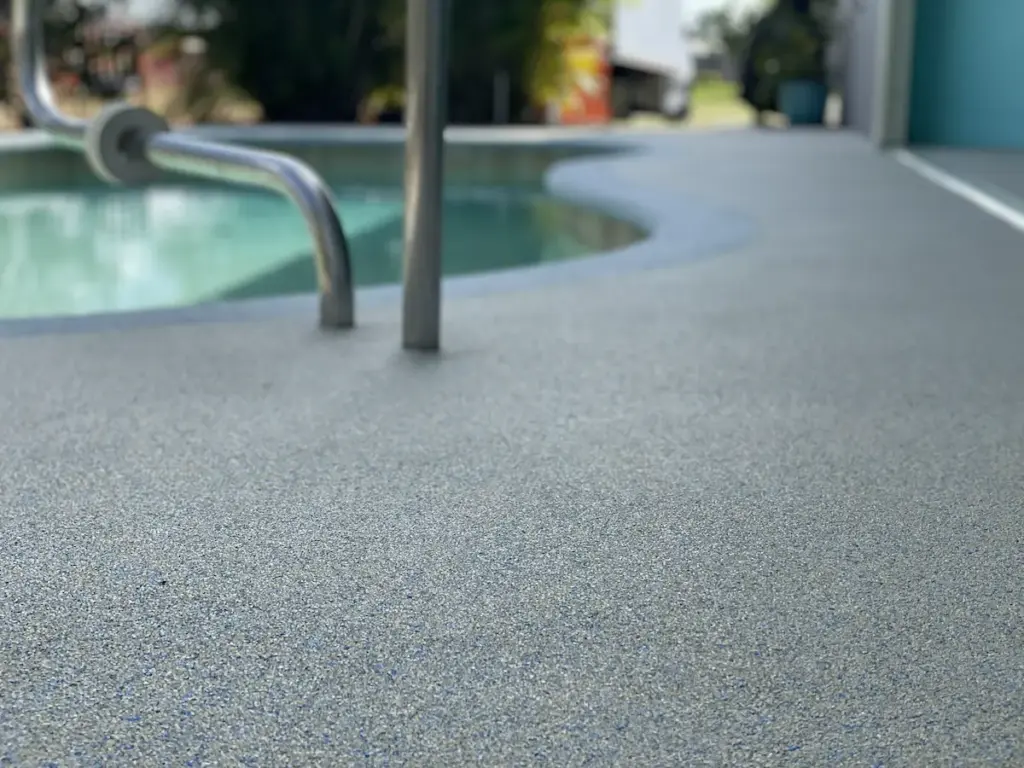
Kids notice color first. Blends, borders, patterns and logos can all be built into the surface, and the color runs through every rubber granule, so it does not wear off the top. Lighter blends stay cooler for the times the water is off.
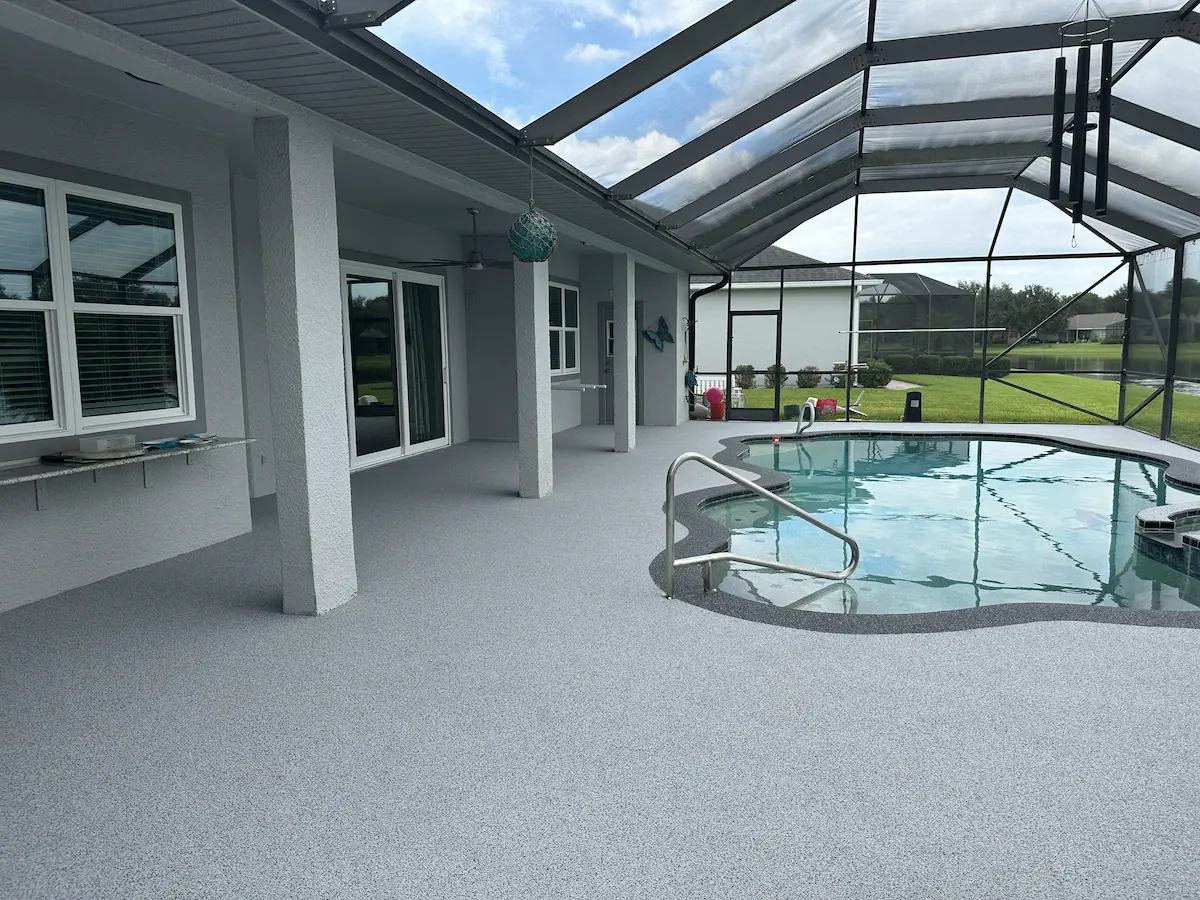
Want a play area next to it? See poured rubber play areas. Pool deck around it too? See rubber pool deck resurfacing.
Care and timing
- Rinse it off and sweep or blow away leaves and grass clippings.
- Use a mild, pH neutral soap on shaded spots that start to look green.
- If the water recirculates, keep the chemistry balanced so residue does not build up on the surface.
- Outdoor installs need about 50 degrees, so a pad quoted in the fall goes on the spring schedule as soon as it is warm enough.
Get your exact price
Answer three quick questions, pick a time, and get a free on-site estimate. Free and on site with Dewayne.
Frequently asked questions
What is the best surface for a splash pad?
One that grips when it is wet, cushions falls and drains. Poured rubber does all three, which is why Soft Crete builds a system for splash pads and wet play. Bare concrete gets slick and hard, and loose fill washes away.
Can you put rubber over our existing concrete splash pad?
Usually, yes, as long as the slab is sound and drains to the grates. The concrete is prepped and primed, and the rubber is troweled around the nozzles and drains.
Does a rubber splash pad get slimy?
When the base slopes to a drain, water drains through instead of sitting on top, which keeps the surface from staying wet. Shady spots can still grow a little green over a summer, and a rinse with mild soap takes care of it.
Is it soft enough for little kids?
It is far more forgiving than concrete when a kid slips or falls. If there is climbing equipment on the pad, tell Dewayne how tall it is. Fall protection depends on thickness and equipment height, and a backyard install is not a certified playground surface unless it is built and tested to that spec.